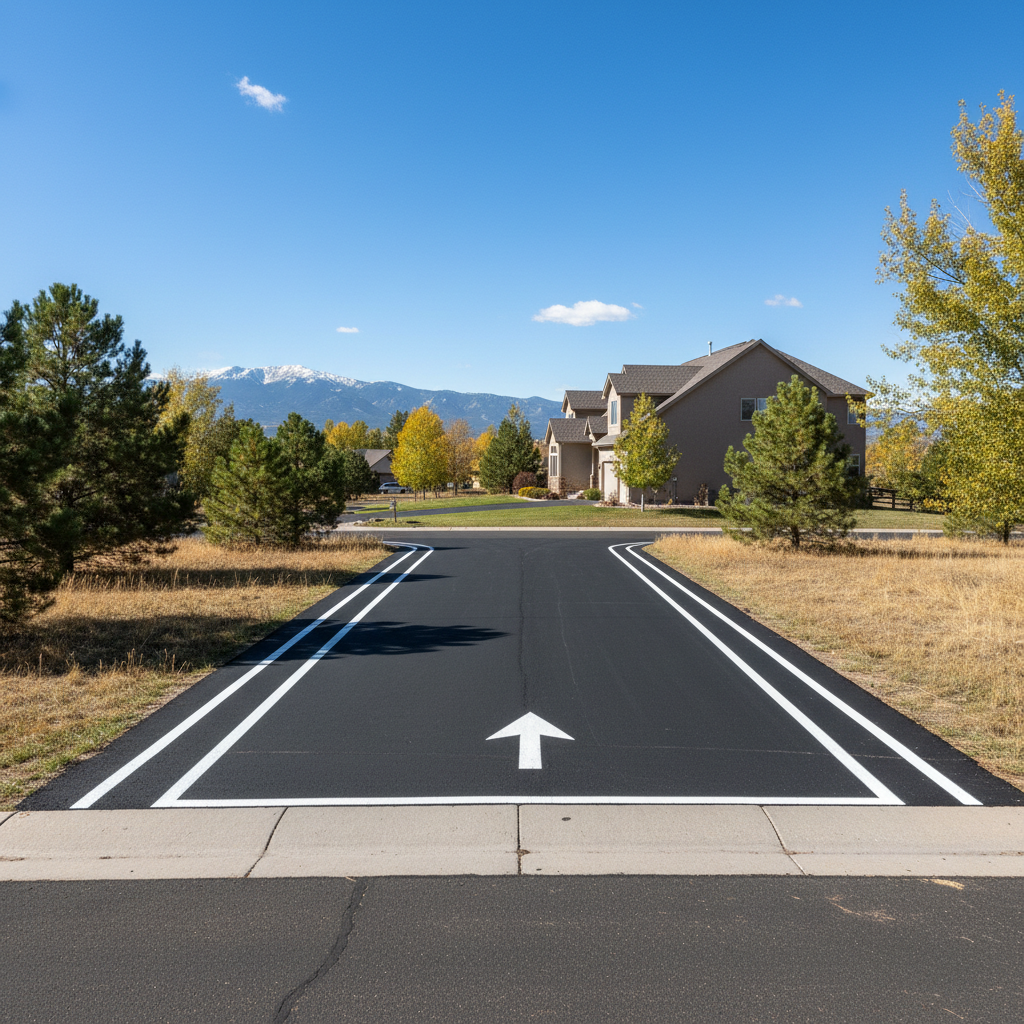
You're thinking about getting your asphalt striped, maybe for a new basketball court, a clear parking area, or just to spruce up your driveway. That's great! A fresh striping job can really make a difference. But I've seen my fair share of folks around Broomfield, especially in those newer developments near Baseline, make some common blunders that lead to regret. Let's talk about what to watch out for so you don't end up with a mess.
Mistake #1: Not Understanding the 'Why' Behind the Lines
This might sound basic, but it's a big one. Are you striping for aesthetics, safety, or compliance? Each of those has different requirements. If it's for a parking lot, you need to know about ADA compliance – that's the Americans with Disabilities Act. It's not just about painting a blue square; there are specific dimensions, access aisles, and signage requirements. I've seen small businesses get fined because they just had someone slap down some lines without understanding the rules. For a driveway or private court, it's more about what you want, but even then, thinking about vehicle flow or game boundaries makes a difference.
Mistake #2: Focusing Only on the Lowest Bid
Look, I get it. Everyone wants a good deal. But when it comes to asphalt striping, the cheapest bid is rarely the best. There's a reason some quotes are significantly lower. It usually means they're cutting corners. This could be using cheap, thin paint that fades in six months, not properly cleaning the surface before applying, or rushing the job. Broomfield weather, with its intense sun and freeze-thaw cycles, is tough on pavement. You need quality materials and proper application to make those lines last. Ask what kind of paint they use and how many coats they'll apply. A good contractor won't mind explaining their process.
Mistake #3: Skipping Surface Prep
This ties into the previous point. You can have the best paint in the world, but if the surface isn't ready, it won't stick. I've seen guys just show up and start spraying over dirt, gravel, or old, peeling paint. That's a recipe for disaster. The area needs to be thoroughly cleaned – swept, blown, and sometimes even power-washed – to remove all loose debris, dirt, and oil. If there are cracks or potholes, those should be addressed first. Paint won't bridge gaps. If a contractor isn't talking about surface prep, that's a huge red flag.
Mistake #4: Not Checking References or Insurance
This is non-negotiable for any contractor you hire, but especially for something that affects the look and function of your property. Ask for references. Call them. Ask to see examples of their work. A reputable company like Thornton Paving Co will have no problem providing these. And insurance? Absolutely vital. Make sure they have liability insurance. If someone gets hurt on your property while they're working, or if they damage something, you want to know they're covered, not you. Don't just take their word for it; ask for proof of insurance. It protects both of you.
Mistake #5: Vague or Non-Existent Contracts
A handshake deal might sound old-school and trustworthy, but it leaves too much to chance. Get everything in writing. What exactly are they striping? What kind of paint? How many coats? What's the timeline? What's the total cost? Are there any warranties on the work or materials? A clear, detailed contract protects you if there's a disagreement down the line. If a contractor is hesitant to put things in writing, walk away. It's a sign they might not stand behind their work.
Mistake #6: Ignoring Cure Times
Once the lines are painted, they need time to dry and cure properly. This isn't just about being dry to the touch; it's about the paint fully hardening and bonding to the asphalt. Driving or walking on freshly painted lines too soon can smear them, lift the paint, or reduce their lifespan significantly. Your contractor should clearly communicate how long you need to keep traffic off the area. If they just pack up and leave without giving you instructions, that's a problem.
Hiring for asphalt striping doesn't have to be a headache. By avoiding these common mistakes, you'll be much more likely to get a quality job that lasts and looks great. Do your homework, ask the right questions, and don't be afraid to say no to a contractor who doesn't instill confidence.