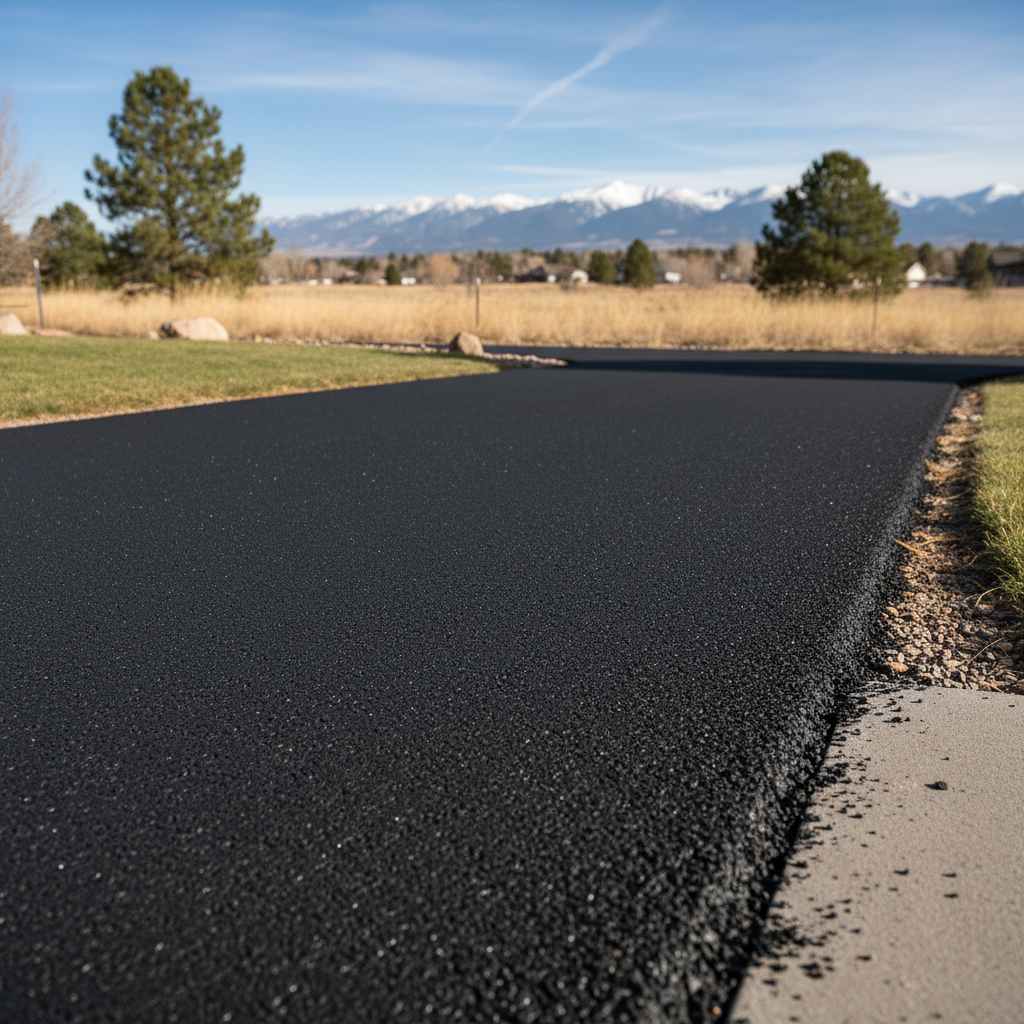
Running a business in Broomfield means you've got a lot on your plate. The last thing you want to worry about is your parking lot or access road. But let's be real, it's often the first thing your customers see. Over the years, I've had countless conversations with business owners about their commercial asphalt needs. Here are the most common questions I get asked, and my honest answers.
How often should I really be sealcoating my commercial parking lot?
This is a big one, and the answer isn't a simple 'every two years.' It depends on a few things. First, how much traffic does your lot get? A busy retail center off Highway 287 is going to wear down faster than a small office park tucked away in a quiet Broomfield neighborhood. Second, what's the condition of the asphalt? If it's new, you'll want to sealcoat sooner to protect it. If it's older and already showing a lot of cracks, sealcoating might be less about protection and more about aesthetics and buying a little more time before a repave.
Generally, for a commercial lot with moderate to heavy traffic, I'd say every 2-3 years is a good target. Lighter traffic might stretch to 3-4 years. But don't just set a calendar reminder; get out there and look at it. Are the aggregate stones starting to show through? Are there a lot of hairline cracks? Those are signs it's time. Sealcoating protects against UV rays, water penetration, and chemicals like oil and gas. It's a preventative measure that saves you money on bigger repairs down the line.
What's the difference between crack filling and crack sealing, and which one do I need?
A lot of folks use these terms interchangeably, but there's a subtle difference that matters for your pavement's longevity. Crack filling is usually for smaller, non-working cracks – meaning they aren't expanding and contracting much with temperature changes. You're essentially filling them to prevent water intrusion. It's often a cold-applied material.
Crack sealing, on the other hand, uses a hot-applied, rubberized material. This stuff is designed for 'working' cracks, the ones that open and close with our crazy Colorado temperature swings. Think about how much the ground moves between a 90-degree summer day and a 10-degree winter night here in Broomfield. That rubberized sealant stays flexible, moving with the asphalt, and provides a much more durable, watertight seal. For most commercial applications, especially with our climate, you're usually going to want crack sealing for any significant cracks. It's a key part of extending the life of your pavement.
My parking lot has potholes. Can they just be patched, or do I need something more extensive?
Potholes are a headache, plain and simple. For smaller, isolated potholes, patching is definitely an option. We'll cut out the damaged area, clean it, and fill it with new hot asphalt, compacting it properly. This can give you a good repair that holds up for a while.
However, if you've got a lot of potholes clustered together, or if the same potholes keep reappearing in the same spots, that's a sign of a deeper problem. It could be a failing sub-base, poor drainage, or just overall deterioration of the asphalt layer. In those cases, just patching is like putting a band-aid on a broken arm. You might need a more extensive repair like an asphalt patch (a larger, full-depth repair) or even milling and an overlay for that section. I always recommend a site visit to assess the root cause before we decide on the best fix. You don't want to waste money on temporary solutions.
How long does a new commercial asphalt parking lot typically last?
A well-built commercial asphalt parking lot, properly maintained, can easily last 20-25 years, sometimes even longer. But that's the key: