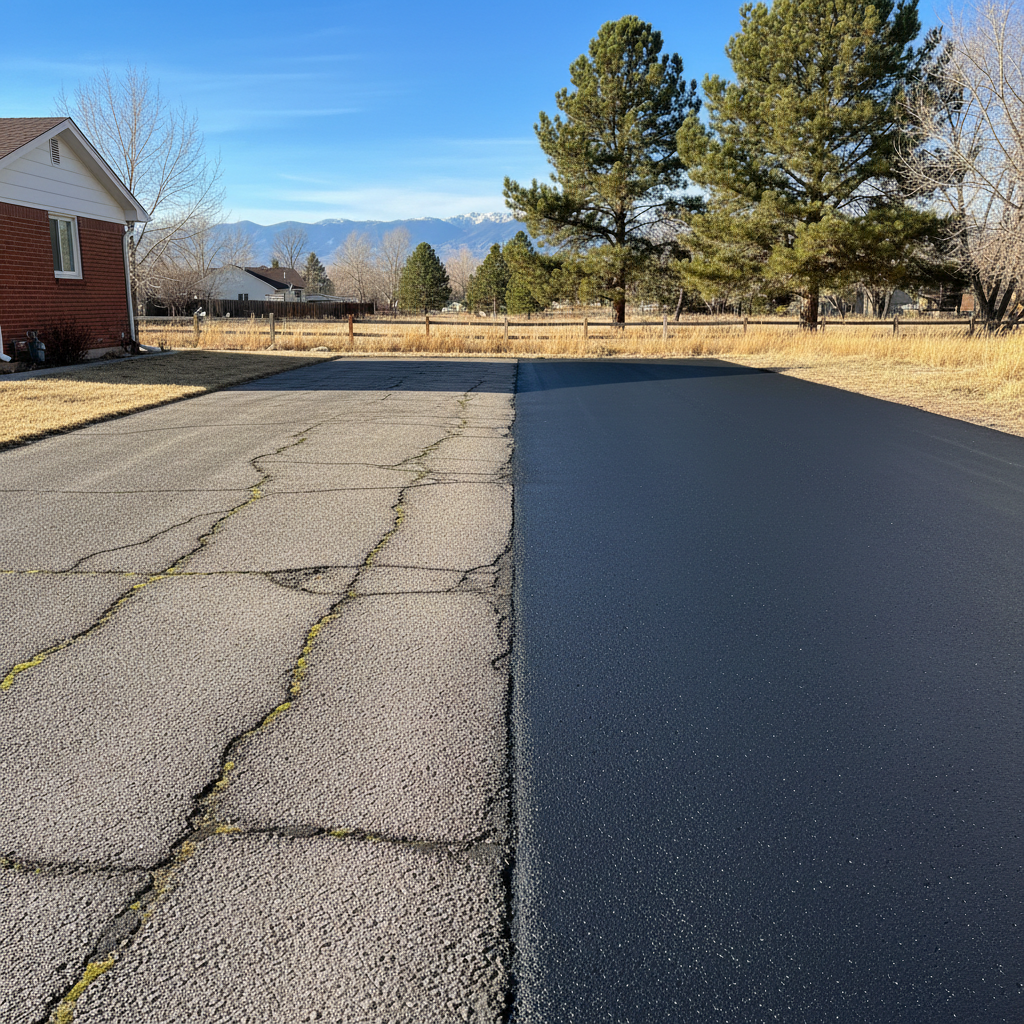
Alright, let's talk about slurry coating your driveway. You've probably heard the term, maybe seen the trucks around town, but what exactly are your options when it comes to protecting that asphalt? Most folks don't realize there's a pretty big difference between a genuine slurry seal and what I'd call a standard asphalt emulsion sealcoat. And for us here in Broomfield, especially with our crazy freeze-thaw cycles, that difference really matters.
What's the Difference?
Think of it this way: a basic asphalt emulsion sealcoat is like a fresh coat of paint. It's a liquid asphalt product, usually thinned out a bit, that goes on thin. This stuff gives your driveway a nice dark look, helps protect against UV rays and minor spills, and fills in those super fine hairline cracks. It's a good, economical option for regular maintenance on a driveway that's already in pretty good shape, honestly.
A slurry seal, on the other hand, is more like a thin, flexible overlay. It's a mix of asphalt emulsion, finely graded aggregate (tiny rocks, basically), water, and some chemical additives. Because it has that aggregate, it's thicker and more substantial. We design it to fill minor surface imperfections, improve skid resistance, and give you a much more durable wear layer than a simple sealcoat. It's definitely a step up.
Cost: Bang for Your Buck
You probably guessed it: the basic asphalt emulsion is cheaper upfront. There's less material, it's less complex to apply, and it needs less specialized equipment. If your budget is super tight and your driveway just needs a cosmetic refresh and some basic protection, this might be your go-to.
A slurry seal will cost you more per square foot. There's more material involved, and the application process is a bit more involved, too. But don't just look at the sticker price, okay? Think about the long game, especially with our local conditions. That extra investment often pays off in extended life and fewer applications down the road.
Durability & Broomfield Conditions
This is where the rubber meets the road, literally. A standard asphalt emulsion sealcoat is good for a year or two, maybe three if you're lucky and the weather's been kind. It's a surface treatment, that's all. It'll fade, and it won't do much for anything beyond the smallest cracks.
A slurry seal? That's a different beast entirely. Because of the aggregate and its thicker nature, it holds up way better to traffic, snow plows (if you've got a service), and our brutal Colorado sun. We design it to last three to seven years, sometimes even longer depending on traffic and how well the surface was prepared. That extra thickness and flexibility mean it can handle the expansion and contraction from our wild temperature swings a lot better than a thin sealcoat. I've seen driveways in Anthem Ranch that get hit hard by the sun and then hammered by winter, and a good slurry seal just holds up better.
Maintenance & Appearance
Both options require a clean surface before application. That's non-negotiable. After we apply it, you'll need to keep traffic off for a day or two, sometimes longer for a slurry seal to fully cure, especially if it's cooler out. Once cured, both are pretty low maintenance – just keep them clean.
In terms of appearance, both will give you that fresh, dark black look initially. The asphalt emulsion often looks smoother, almost like a painted surface. A slurry seal, because of the aggregate, will have a slightly coarser, more textured finish. Some people prefer the smooth, others like the more natural asphalt look of the slurry. It's really a matter of taste, isn't it?
My Recommendation for Broomfield Homeowners
Look, if your driveway is brand new or in near-perfect condition, and you just want to keep it looking sharp and protected from UV, a quality asphalt emulsion sealcoat applied by pros like us at Thornton Paving Co. can do the job for a few years.
But for most Broomfield homeowners, especially if your driveway is a few years old, has some minor surface wear, or you're just looking for the best long-term value and protection against our crazy weather, I'm going to lean towards a slurry seal. It's a more robust solution. It fills minor imperfections, provides a more durable wear surface, and ultimately gives you a longer-lasting result. You'll spend a bit more upfront, but you'll be doing it less often, and your driveway will thank you for it in the long run.
It's all about matching the right solution to your driveway's condition and your expectations. Give us a call, and we can take a look and give you an honest assessment.